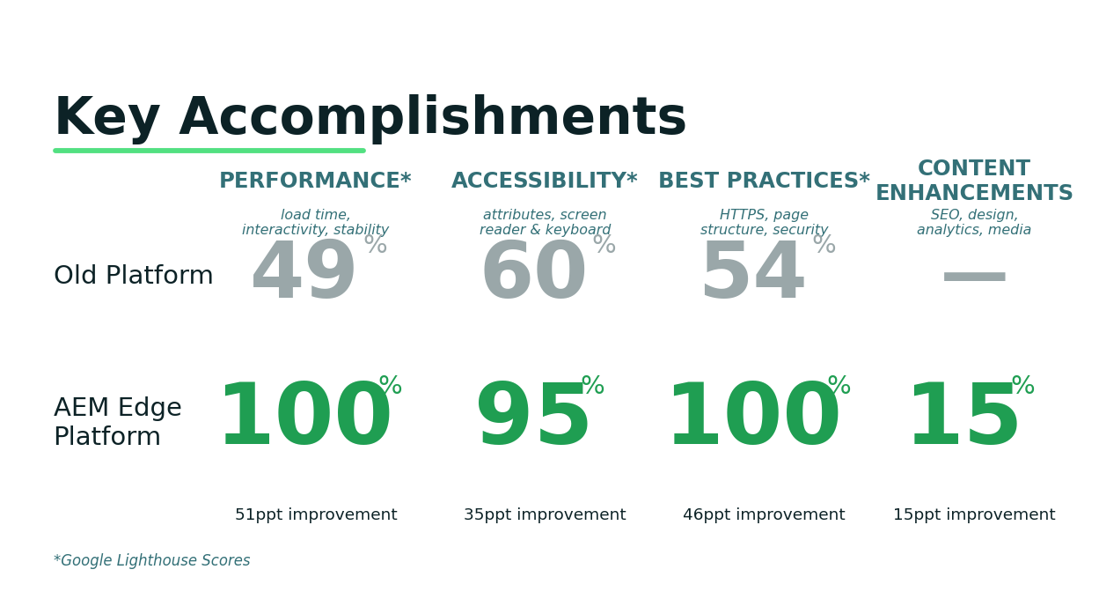
Transformation Goals
Three priorities anchored the engagement, each tied directly to a business outcome rather than a purely technical milestone.
- Make registration traffic spikes easier to absorb without site instability or customer disruption.
- Accelerate campaign launches through simpler authoring, reusable blocks, and faster publishing workflows.
- Establish a scalable Adobe Edge Delivery Services foundation for additional regional and event-specific web properties.
Myridius Solution Approach
A Pilot Built for Speed, Scale, and Repeatability
Myridius approached the work as an operating model shift, not a one-time migration. The team established an edge-native foundation, embedded faster authoring into everyday workflows, and created a repeatable pattern the organization could reuse across future properties.
- Orchestrated the foundation: Myridius established a modern delivery model using EDS and CDN-driven scale, helping high-traffic moments become routine operating conditions rather than crisis events.
- Embedded performance into the workflow: Content teams could work in familiar document-based workflows, supported by reusable blocks that made event pages, campaign updates, and promotional modules easier to assemble and publish.
- Reimagined the operating model: The pilot created a repeatable pattern that could be extended across regional properties, event-specific pages, and future digital experiences without forcing each launch to begin from zero.
- Predictable delivery and marketing autonomy: Using proprietary accelerators and a standardized migration framework, Myridius brings customers live in under 90 days on average, with more than 15 successful site migrations behind the approach. Following go-live, complimentary hypercare support, including end-user enablement and light configuration assistance, helped the marketing team take ownership of publishing quickly and operate with greater independence.
How It Works
From Registration Rush to Reliable Experience
When a major registration window opens, high-intent participants flood the site looking for dates, race formats, pricing, requirements, and the path to register. With the modernized foundation, pages are delivered closer to the user through edge delivery, reducing the strain on traditional origin infrastructure and improving the speed of the experience.
Behind the scenes, campaign teams can prepare and update content using reusable blocks rather than rebuilding each page manually. A content author can update an event announcement, publish a registration reminder, or adjust supporting details with less dependency on technical release cycles. The experience becomes more responsive for both sides of the journey: runners get faster access to the information they need, and the business gets a faster way to move campaigns into market.
A useful way to think about it is race-day operations. You would never ask every runner to squeeze through one narrow gate at the same second. You spread entry points, guide traffic, reduce friction, and keep people moving. Myridius applied the same principle to the digital registration journey by using edge delivery, modern authoring, and reusable experience patterns to keep demand flowing.
Governance and Trust
Control and Quality Built Into the Workflow
Governance was embedded into the everyday publishing model rather than bolted on afterward. Document-based content workflows, reusable page structures, and campaign templates created consistency and human oversight at the point of authoring, while content quality and governance patterns kept published experiences aligned with brand and accessibility standards.
On the engineering side, GitHub-based development workflows, component-driven delivery, and a pilot-first model provided change control and review discipline. The work passed through information security reviews and architecture review boards, demonstrating that the foundation was built to operate credibly under real enterprise governance conditions.